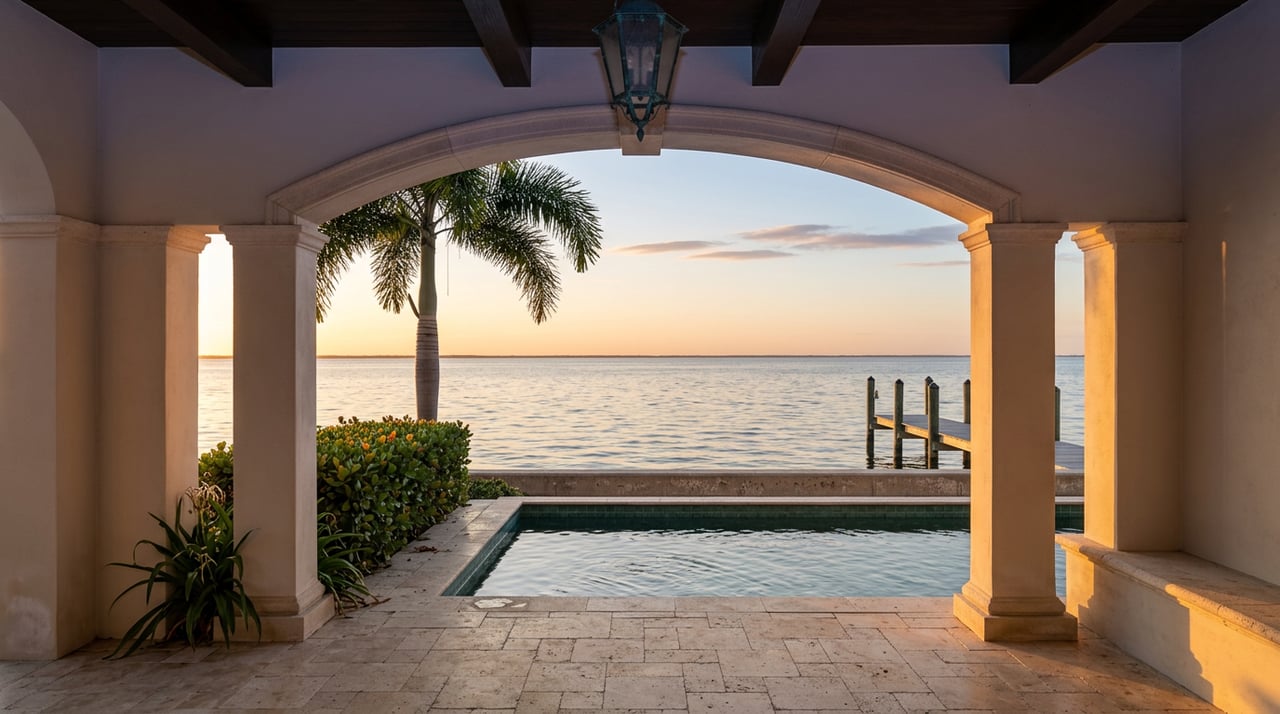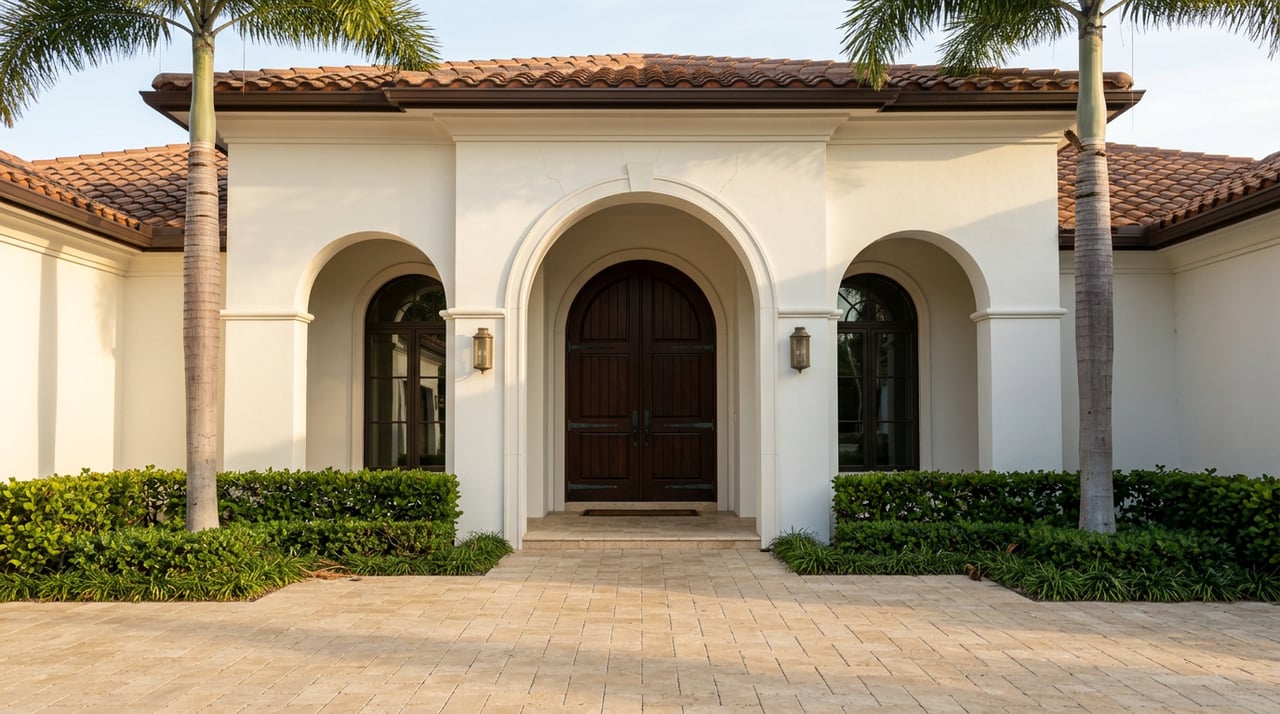
Drive the length of Gulf Shore Boulevard through The Moorings and you will pass a low-rise building from the 1960s and a construction fence less than a quarter mile apart, sometimes on the same block. One is asking a buyer to look past dated finishes for a view. The other is asking for a deposit on something that does not exist yet. Both are pricing the same water.
What separates them in 2026 is not location or even age on paper. It is a reserve-funding law that finished phasing in on January 1 of this year, and it is doing more to decide which Moorings condos get bought, held, or bought out from under their owners than any renovation ever could.
The math that used to work here
For years, the logic of buying an older condo on this stretch of Gulf Shore Boulevard was straightforward. New construction is scarce along the corridor because the land was built out decades ago, so most fresh inventory arrives through redevelopment rather than new subdivision. That scarcity kept older buildings relevant. A dated two-bedroom in a bayfront building near Doctors Pass could still command a real price if it came with deeded dock access, since bayfront units with private slips near the pass have long been able to approach or even exceed beachfront pricing depending on slip size and water frontage. Age was a discount on finishes. It was rarely a discount on the water itself.
That is the math a lot of buyers still assume when they look at a 1960s Moorings building next to a glass tower under construction. Buy old, renovate later, keep the location. It worked because the building's ongoing costs were mostly invisible until you owned there.
What January 1, 2026 changed
Florida's post-Surfside reforms created two separate obligations for condominium and cooperative buildings three or more habitable stories tall: a milestone structural inspection under Florida Statute 553.899, and a Structural Integrity Reserve Study, or SIRS, under Florida Statute 718.112(2)(g). The milestone inspection is a one-time-per-decade physical checkup. The SIRS is the financial plan that follows it, covering eight components including the roof, load-bearing structure, fire protection, plumbing, electrical systems, waterproofing, and windows and doors.
The part that changed the math for buyers arrived on January 1, 2026. Associations can no longer vote to waive or underfund reserves for those eight components. For years, a board could put reserve funding to a member vote and simply choose not to save for the roof or the parking garage. That option is gone for any budget adopted on or after January 1, 2025, and the transition period for older budgets ran out at the start of this year.
The insurance market moved just as fast. Citizens Property Insurance will not issue or renew a policy for a condominium unit or association that has not completed both its milestone inspection and its SIRS, and private carriers have adopted the same underwriting standard. A building that skipped its reserve study is not just out of compliance on paper. It is becoming difficult or impossible to insure.
Naples' own building department reported it had identified 245 buildings citywide needing milestone inspections, and by the spring of 2025 the vast majority, more than 80 percent, had already filed their reports. That pace tells you this was never a slow-moving compliance exercise here. It moved fast because the consequences moved fast.
An association with deferred maintenance can no longer paper over it with a vote. The math has to show up somewhere: in higher dues, in a special assessment, or in a lower price at the closing table.
What that means for a specific building's price
Here is where the mechanism gets concrete. Coastal buildings within three miles of the shoreline are required to complete their first milestone inspection at 25 years of age rather than 30, and Naples applies that coastal rule. The Moorings traces to 1957, when developer Milton Link purchased the original tracts of land, and most of its early condo stock went up through the 1960s and 1970s, so a meaningful share of that inventory is well past the 25-year trigger already, whether or not an individual building has acted on it.
If the milestone inspection turns up real deterioration, the SIRS then has to show a funding plan for fixing it, and the association can no longer wave that number away. For a mid-sized building, a seven-figure structural repair spread across even eighty units works out to a per-unit assessment in the tens of thousands of dollars, and that is before financing costs or insurance premium increases tied to the repair timeline.
Owners facing that math have three real choices: pay the special assessment, sell into a soft market that already knows the assessment is coming, or sell to a developer who wants the land and the water frontage more than the building sitting on it. The third option is exactly what has been happening on this stretch of Gulf Shore Boulevard.
| Older unit, pre-2026 assumption | Older unit, current reality | New construction | |
|---|---|---|---|
| Reserve funding | Assumed adequate or waivable | Must fully fund eight SIRS components, no waiver option | Reserve schedule starts fresh, funded from day one |
| Insurance | Assumed renewable | Renewal now conditioned on completed SIRS and milestone report | New build, new policy, current code |
| Assessment exposure | Unknown until you own there | Disclosed through milestone report and SIRS funding schedule | Minimal near-term structural exposure |
| What you are pricing | The unit and the view | Increasingly, the land under the building | The finished or pre-construction unit |
The corridor is already answering the question
The former Executive Club site did not get a facelift. It became 3300 Gulf Shore, an eight-story, 51-residence project from Kolter Urban with a private 16-slip marina, on land between the Gulf and Doctors Bay in the Moorings, with a groundbreaking celebration held January 29, 2026. That is not a renovation story. It is a teardown story, and it is the clearest example so far of a Moorings building's land value overtaking its value as a place to live in as-is.
The same pattern is further along just south of Doctors Pass in Coquina Sands, the neighborhood next door, where the 1964-built Carriage Club has drawn enough developer interest that units there have reportedly traded at premiums exceeding double their traditional resale value, positioned by sellers as an entry point into a redevelopment play rather than a place to renovate and keep. That stretch of the boulevard has already seen older buildings give way to Four Seasons Residences, Harbour House, and Olana, with the Rosewood Residences still under construction and targeting completion in the fourth quarter of 2026. It is the same regulatory pressure, one neighborhood south, showing what happens when a building's reserve math stops working.
Inside the Moorings itself, the response so far looks like disclosure rather than demolition. Admiralty Point, the gated bayfront community bordered by Moorings Bay, Doctors Pass, and the Gulf, now markets itself with assessments paid and both its milestone inspection and SIRS already completed, alongside a lobby and common-area renovation finished by December 2025. Listings at Bordeaux Club lead with a passed milestone inspection the same way an agent once led with a renovated kitchen. That shift, compliance treated as a headline feature rather than fine print, is itself evidence of how much weight this now carries in a Moorings buyer's decision.
None of this happened because Gulf Shore Boulevard suddenly became more desirable. The location was always desirable. What changed is that owning an aging building here now comes with a disclosed, unavoidable funding number, and for buildings facing a real shortfall, selling to someone who wants the land is starting to look like a cleaner outcome than funding the repair. The SIRS mandate did not create that choice. It removed the option to keep deferring it.
What this actually means if you are comparing units
If you are looking at an older Moorings condo next to a new construction listing on the same street, the comparison is no longer just square footage and finishes. Before writing an offer on anything built before roughly 1995, ask for:
- The most recent milestone inspection report, including whether it is a phase one visual finding or a phase two report triggered by deterioration.
- The SIRS report and its funding schedule for the eight mandated structural components, including whether the association is currently funding at the level the study requires.
- Confirmation of when the current budget was adopted, since that date determines whether the reserve waiver ban already applies to this building.
- A current estoppel letter requested close to your closing date. These can go stale quickly once a milestone report lands and a board starts responding to it.
- The association's current property insurance carrier and renewal status, given that Citizens and most private carriers now condition coverage on SIRS and milestone compliance.
- Whether the listing itself is marketed around developer interest or redevelopment potential. If it is, treat that language as pricing information about the land, not condition information about the unit.
A couple of questions worth asking early
Does a brand new building on Gulf Shore Boulevard ever need a SIRS? Yes. The SIRS requirement is triggered by a building's height, three or more habitable stories, not its age. A building completed in 2027 will eventually need one. It simply will not face a milestone inspection for decades under the age-based trigger.
Why do some bayfront units near Doctors Pass cost as much as beachfront units? Private dock access. Bayfront buildings with deeded slips close to the pass can rival or exceed beachfront pricing depending on slip size and water frontage, since bridgeless Gulf access is its own scarce amenity on this corridor.
Reading a Moorings listing well in 2026 means reading two documents most buyers never ask for: the milestone report and the SIRS funding schedule. They tell you whether you are buying a home or an option on the land beneath one.
If you are comparing an older Gulf Shore Boulevard condo to something newly built and want a second set of eyes on what the paperwork actually says before you write an offer, Nick Solimene has spent his career in these specific buildings and can walk you through it. Let's Connect.