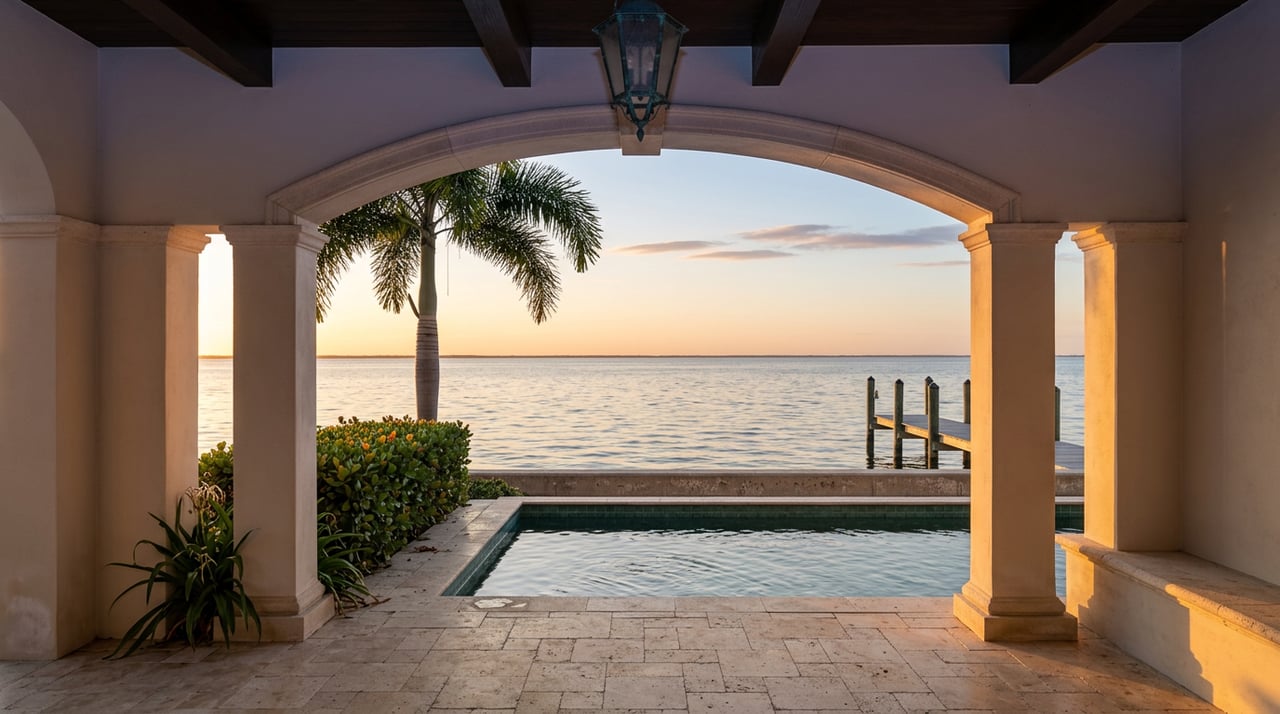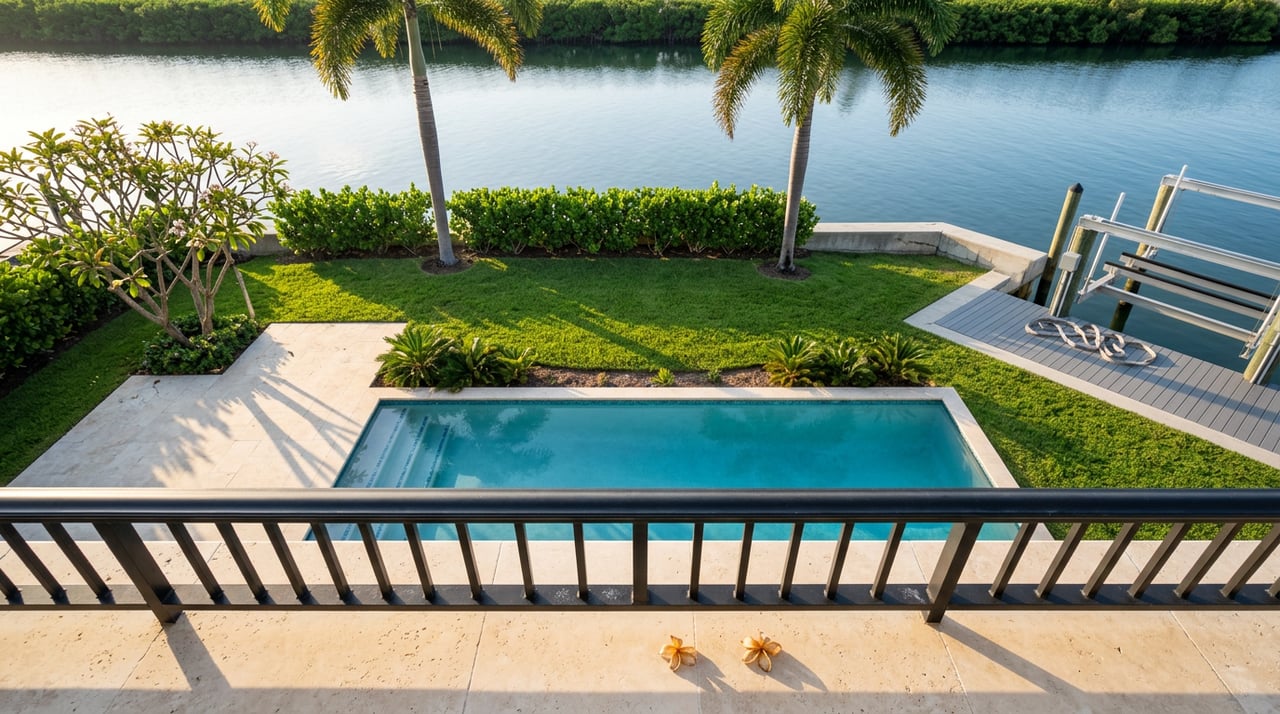
A buyer closes on a Gordon Drive estate in January, cash deal, clean title, thirty days start to finish. The house is move-in ready. The seawall is original to the 1970s build and the dock needs a new lift before boating season. The buyer assumes this is a contractor call: get a quote, get it scheduled, done in a few weeks like any other home project.
Six months later, the lift still isn't in the water. The house closed on the fast clock. The dock is running on a different one entirely, and nobody explained the difference before the offer went in.
Two Agencies, Two Very Different Clocks
A Port Royal home sale moves at the pace of any Naples luxury transaction. Collier County building permits for standard construction work typically clear in three to six weeks. That's the timeline most buyers mentally apply to everything on the property, including the water side.
Work that touches the seawall, the dock, or anything below the mean high water line answers to a different authority. The Florida Department of Environmental Protection reviews that work separately, and those permits commonly run three to six months. Projects involving mitigation, mangrove impact, or a state sovereignty lands lease can stretch well past that. Add potential U.S. Army Corps of Engineers review for work in navigable waters, and a straightforward-looking lift replacement can involve three separate agencies before a single piling gets driven.
The sequencing makes the delay worse, not better. Under Collier County's land development code, all required DEP permits for a dock facility have to be obtained before the county will issue its own building permit for that facility. The county isn't slow here. It's simply waiting on the state, and the state's clock doesn't start ticking until someone actually files.
Marine contractors who work Port Royal regularly have adapted to this by starting the DEP application at the same time they start drawing up plans, rather than waiting for county approval first. That's the workaround. It only helps if someone tells the buyer about it before closing, not after.
The Rule That Makes Water Frontage Deceptive
Listings sell square footage of water frontage. What actually governs your boat is a different number entirely, and it's one that predates most of the homes currently on the market.
Port Royal operates under legacy dock guidelines that cap protrusion from the seawall at 22 feet, limit combined dock length along a property to 100 linear feet, and require roughly 20-foot side setbacks. Those limits apply regardless of how much water frontage the parcel has. A lot with 150 feet on the canal and a lot with 80 feet can be subject to the same 22-foot ceiling on how far a dock can reach into the water.
Run the math on an actual boat and the constraint gets concrete fast. A 32-foot boat with a 10.5-foot beam, positioned to use the dock's berthing space, already consumes most of the interior room available under a 22-foot protrusion limit. There isn't much margin left for a gangway, a second lift, or a wider vessel down the road.
The takeaway for anyone shopping Port Royal with a specific boat in mind: measure the dream boat against the parcel's permitted dock footprint before falling in love with the water frontage number on the listing sheet. They are not the same measurement, and the gap between them is where offers go sideways after inspection.
A Third Reviewer Before The County Ever Sees Your Plans
Before Collier County ever opens a permit application, the Port Royal Property Owners Association reviews exterior work on the property, and that review covers more than most buyers expect. New construction, additions, roofing, paint colors, dock plans, generators, fences, and landscaping changes all pass through the association first. Submissions go in ahead of county permitting, and the association's building page lays out separate checklists for docks, roofing and solar, fences, and general architecture, each with its own document requirements and deadline schedule.
None of this is unusual for a private waterfront community protecting its sightlines. It is, however, a step that adds real calendar time to any exterior project, and it runs in addition to, not instead of, the county and state process.
The DEP permit has to exist before the county permit can be issued. That single sequencing rule is the reason a dock project planned like a kitchen remodel ends up running a full season behind.
What A Clean Cap Can Hide
A seawall's hardest work happens where nobody can see it. Tie-back rods, dead-man anchors, and the soil behind the wall do the structural lifting, and none of it is visible from the dock or from listing photos. Marine inspectors working Port Royal and Aqualane Shores routinely find that seawalls in these older canal-front communities can hide tie-back corrosion or spalling behind a cap that looks freshly painted and perfectly straight.
This matters at the offer stage because seawall replacement is a significant capital expense, with industry cost estimates running roughly $1,000 per linear foot depending on material and site access. On a property with 100-plus linear feet of seawall, that is not a repair line item, it's a number that belongs in the negotiation.
A current marine and seawall inspection, ordered during the due diligence period rather than assumed away, gives a buyer three things: a realistic repair budget, leverage to negotiate a credit if the wall is compromised, and a permit-history check that confirms whether prior work on the structure was actually approved or just done.
Building The Timeline Backward
Given how differently these clocks run, the practical move is to plan the purchase in reverse, starting from the state timeline rather than the county one.
- Order the marine and seawall inspection inside the due diligence window, not after closing, since this is the one item most likely to change the purchase math.
- Request the property's existing DEP and county permit history for the dock and seawall before waiving any inspection contingencies.
- If exterior work is planned, confirm the PRPOA submission deadlines early. The association's process runs on scheduled meeting dates, not a rolling calendar.
- Engage a marine engineer before closing to prepare survey work and draft DEP application materials, even though the formal submission has to wait until you hold title. Preparation time doesn't have to wait.
- On teardown or rebuild lots, plan for the longer end of the range. New-construction docks and seawalls have to meet current code, and combined renovation or rebuild timelines in Port Royal commonly run well beyond a single boating season.
A Few Questions Worth Asking Before You Write An Offer
Does every seawall repair need a state permit? Small cosmetic fixes may not, but structural work on panels, caps, or tie-backs almost always triggers a Collier County permit at minimum, with DEP review required for anything affecting the water side of the wall.
Can I keep the existing dock exactly as it is? Only if it's fully compliant and permitted as built. An existing dock can look complete and still fall short of what your specific vessel needs once you check it against the protrusion and length limits, which is why permit history matters as much as the physical structure.
Does buying a teardown reset the clock? It extends it. New-build waterfront estates need deep pilings, elevated first-floor construction for flood compliance, and seawall or dock work built to current code rather than grandfathered standards, all of which route through the same three-agency review described above.
Port Royal's transaction pace looks fast because the house side of the deal usually is. The water side runs on state and federal calendars that don't compress no matter how motivated the buyer or seller. Understanding which clock governs which part of the property, before the offer goes in rather than after the inspection period closes, is the difference between a dock that's ready for next season and one that's still waiting on paperwork this time next year.
If you're evaluating a Port Royal purchase and want a clear read on what a specific parcel's dock, seawall, and permit history actually allow, Nick Solimene can help you build the due diligence list before you write the offer, not after. Let's Connect.