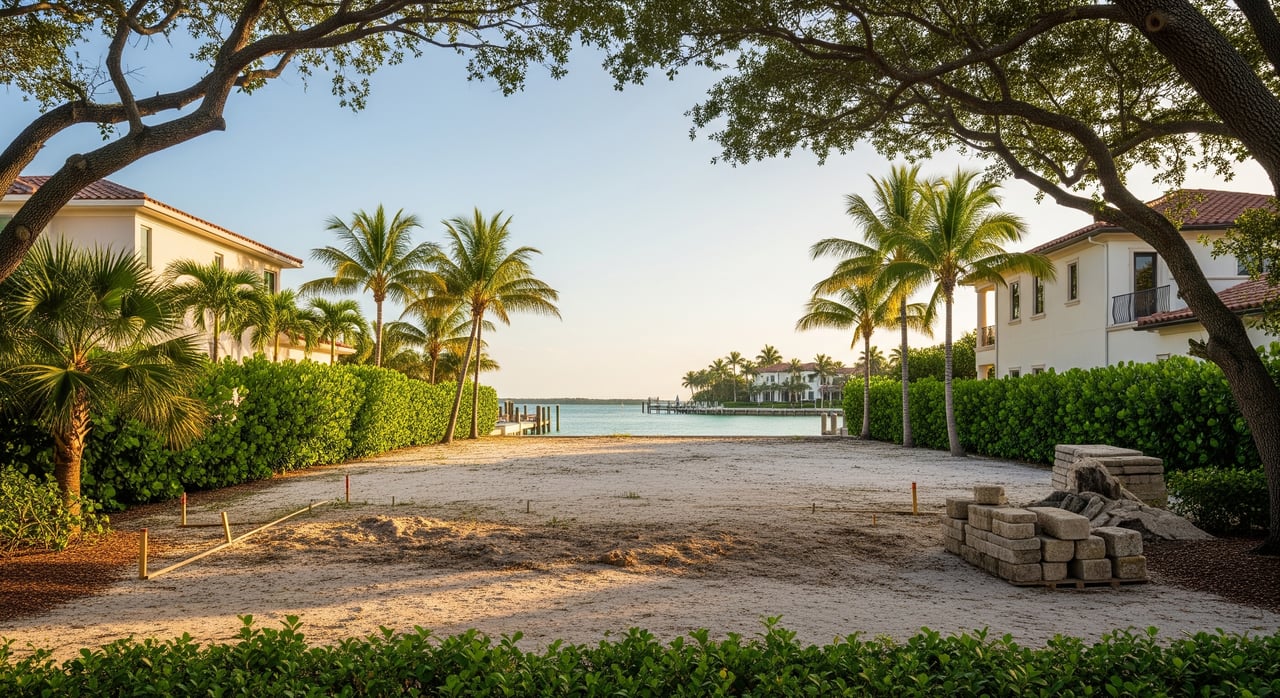
Thinking about building your next home in The Moorings and wondering if a tear-down lot is the smarter play than a major renovation? You are not alone. In this coastal, high-demand Naples enclave, the path from old house to new custom build is common, but the rules, permits, and premiums are different from inland neighborhoods. In this guide, you will learn how lots are valued, which approvals to expect, timelines to plan for, and how to compare a new build with renovation. Let’s dive in.
The Moorings tear-down market at a glance
The Moorings is a mature coastal community where buyers often value proximity to the beach, Gulf views, and boating access. Vacant land is scarce, so many opportunities involve older homes that are best suited for teardown and rebuild.
Typical buyers include local custom builders, spec builders, value-focused owner-occupiers, and investors. Because coastal rules and water-related improvements add complexity, pricing and timelines often reflect those realities. Premium waterfront or Gulf-view lots command outsized prices, and lots closer to convenient beach access are especially competitive.
What drives land value in The Moorings
Lot size and shape
Bigger, regular-shaped parcels with a generous buildable envelope are more valuable. Rectangular lots are typically easier and cheaper to build on than irregular parcels. Usable rear and side yards, plus lot depth and privacy, add appeal and flexibility for pool and outdoor living.
Frontage and water orientation
Direct Gulf frontage or unobstructed Gulf views carry the highest premiums. Navigable bay or canal frontage increases value when seawall and dock rights exist. East–west orientation influences sun exposure, view lines, and outdoor living design, which can affect resale.
Beach access and walkability
Lots within an easy walk to private or convenient public beach access points are generally more desirable. The ability to reach the beach without a long drive or parking can be a tangible lifestyle benefit for buyers.
Club and community considerations
Eligibility for private club membership, where applicable, may increase a lot’s appeal. Verify whether membership is available to residents, whether there are waitlists, how transfers work, and what fees apply. These factors can influence demand and resale.
Utilities and serviceability
Municipal sewer and utility availability increases buildability and reduces complexity. Confirm connections, capacity, and tie-in costs. If a property relies on septic or lacks certain utilities, the added cost and time can reduce land value.
Seawalls, mangroves, wetlands, easements
Seawall presence and condition are crucial on waterfront parcels. Repairs or replacement can be costly and regulated. Wetlands, mangroves, conservation buffers, drainage or utility easements, and access strips can all reduce the buildable area or limit improvements. A detailed survey and site review are essential.
Zoning, setbacks, and design limits
Local zoning and any deed restrictions or architectural review requirements dictate setbacks, height, lot coverage, and impervious caps. These controls limit home size and design, which directly impacts valuation. Always confirm what the building envelope allows before you finalize pricing.
Flood and insurance realities
FEMA flood zones and base flood elevations drive foundation type, required elevation, and sometimes engineered pilings. Flood and wind insurance costs can be material. Insurability and ongoing premiums are part of the total cost of ownership and may affect future resale.
Comps and land-residual analysis
Valuation often blends vacant lot comps with recent tear-down-plus-new-home sales. In a market with few vacant land comps, appraisers and builders commonly use a land-residual method: estimate the value of the completed home, subtract construction and soft costs, and derive a logical land value.
Permits and rules to check early
Multiple agencies have a say in coastal projects. Expect to consult Collier County Building and Zoning, the Collier County Property Appraiser for parcel details, FEMA flood maps, the Florida Department of Environmental Protection for coastal rules and the Coastal Construction Control Line, and the U.S. Army Corps of Engineers for shoreline work like docks and seawalls. The Moorings Community Association and any architectural review requirements may also apply.
Common coastal permitting issues
- Coastal Construction Control Line rules can limit or condition structures located seaward of the line.
- Seawall and dock work often requires county, state, and federal approvals.
- Tree removal and protected species triggers mitigation and permits in some cases.
- Elevation and foundation design must meet Florida Building Code and local floodplain rules.
- Environmental resource permits may be needed for mangrove, wetland, or shoreline impacts.
HOA and architectural review
Many neighborhoods require architectural review board approvals before demolition or new construction. Expect guidelines on design and materials. These reviews add steps and time, so plan for them early.
Due diligence checklist you can use
- Title and legal
- Order a current title report. Review covenants, restrictions, recorded easements, and any access or preservation limitations.
- Check for open permits or violations.
- Physical and environmental
- Obtain an ALTA survey to confirm boundaries, elevations, setbacks, easements, and encroachments.
- Arrange a hazardous materials survey for demolition planning and a structural assessment if needed.
- Commission a geotechnical report to inform foundation and any piling design.
- If relevant, delineate wetlands, mangroves, and shoreline boundaries.
- Utilities and serviceability
- Confirm sewer availability and connection costs or verify septic status and required upgrades.
- Locate electric, water, gas, and cable lines. Assess any relocation or undergrounding needs.
- Review stormwater and drainage requirements for the lot.
- Permits and ARB
- Schedule pre-application meetings with Collier County and The Moorings architectural review team if required.
- Verify building envelope, maximum finished square footage, setbacks, height, and lot coverage limits.
- Insurance and insurability
- Get preliminary flood and wind insurance quotes to understand annual costs and carrier appetite.
- Financial feasibility
- Secure builder estimates for a complete new build, including elevation, seawall work, and tie-ins. Also price a major renovation for comparison.
- Include soft costs such as design, engineering, surveys, permits, impact and ARB fees, mitigation, and contingencies.
- Closing and demolition logistics
- Plan utility disconnects, demo permits, abatement if needed, debris disposal, and staging for equipment within local noise and work-hour rules.
Timeline from offer to move-in
- Pre-offer research and comps: 1 to 2 weeks, longer if specialized coastal questions arise.
- Contract due diligence: often 30 to 90 days for surveys, soils, title, and preliminary permits feedback.
- Permitting: 3 to 9 months for county and coastal approvals, longer if CCCL or seawall issues complicate the scope.
- Demolition and site clearing: 2 to 8 weeks, extended if hazardous materials require abatement.
- Foundation and seawall work: weeks to months depending on scope and sequencing.
- New construction build: often 12 to 24 months for custom homes in the Naples area.
- Total purchase to move-in: commonly 12 to 36 months, with coastal projects trending longer.
New build vs renovation: making the call
When you line up total costs and risks, a clear answer often emerges. Use a side-by-side comparison that includes acquisition price, demolition, permits, impact and connection fees, site prep, seawall work, elevation or pilings, hard construction costs, soft costs, financing and carrying costs, and a healthy contingency. Renovation may win if the existing structure is strong and coastal upgrades for a new build are especially expensive. If renovation costs approach or exceed the full new-build path, a tear-down and rebuild is usually more compelling.
Key decision drivers:
- Structural condition and design potential of the existing home.
- Extent of coastal constraints like CCCL jurisdiction and seawall needs.
- Required elevation and foundation type.
- Time horizon and risk tolerance for permits and cost volatility.
- Expected resale value of the completed home.
Risks unique to coastal Moorings lots
- Coastal permitting delays or denials for seawalls, docks, or CCCL-area work.
- Long-term sea-level rise and shoreline changes that influence future insurability and resale.
- Cost volatility for piling, seawalls, and storm-resilient materials.
- Hidden easements, riparian rights, or historical public access corridors that limit exclusive use.
- Community association and club rules that add fees, waitlists, or design limits.
Getting started in The Moorings
Take a proactive approach before you write an offer:
- Meet early with Collier County permitting staff and The Moorings architectural review to surface constraints.
- Order an ALTA survey and a geotechnical report during the contingency period.
- Confirm FEMA flood zone and base flood elevation, then get preliminary flood insurance quotes.
- Get written confirmation of sewer service or septic requirements.
- Ask experienced local builders for preliminary budgets and use a land-residual estimate to sanity check pricing.
- Verify seawall and dock status and engage a coastal engineer if repairs or replacement are likely.
- Build in extra time and contingency for coastal approvals and seasonal weather impacts.
- If club access matters, verify eligibility and rules directly with the association or club.
A local, high-touch advisor helps you move faster with fewer surprises. As a Naples waterfront specialist focused on The Moorings and nearby micro-markets, I coordinate the right experts, ground your offer in real comps and land-residual logic, and keep your process moving from due diligence through closing and construction. Ready to explore tear-down opportunities or compare renovation vs rebuild on a specific property? Let’s talk about your goals and next steps. Connect with Nick Solimene today.
FAQs
How are tear-down lots in The Moorings valued?
- Buyers and appraisers use recent lot and tear-down comps plus a land-residual method that subtracts construction and soft costs from the expected finished-home value.
Which lot features add the biggest premium in The Moorings?
- Direct Gulf frontage or unobstructed views, navigable bay or canal frontage with seawall and dock rights, larger rectangular parcels, and easy access to beach entry points.
What permits and agencies are involved in coastal tear-downs?
- Expect Collier County Building and Zoning, FEMA flood mapping, Florida DEP for CCCL rules, the U.S. Army Corps for shoreline work, and The Moorings’ architectural review if applicable.
How long does permitting and construction usually take?
- Permitting commonly takes 3 to 9 months, demolition 2 to 8 weeks, and custom build 12 to 24 months, with total timelines often running 12 to 36 months.
What inspections and surveys should I order during due diligence?
- An ALTA survey, geotechnical report, hazardous materials review for demo, utilities verification, seawall and dock assessment, and preliminary insurance quotes for flood and wind.
When does renovation make more sense than a tear-down in The Moorings?
- If the structure is sound, coastal constraints or elevation costs for a new build are high, and the renovation budget materially undercuts the full new-build path with lower risk.