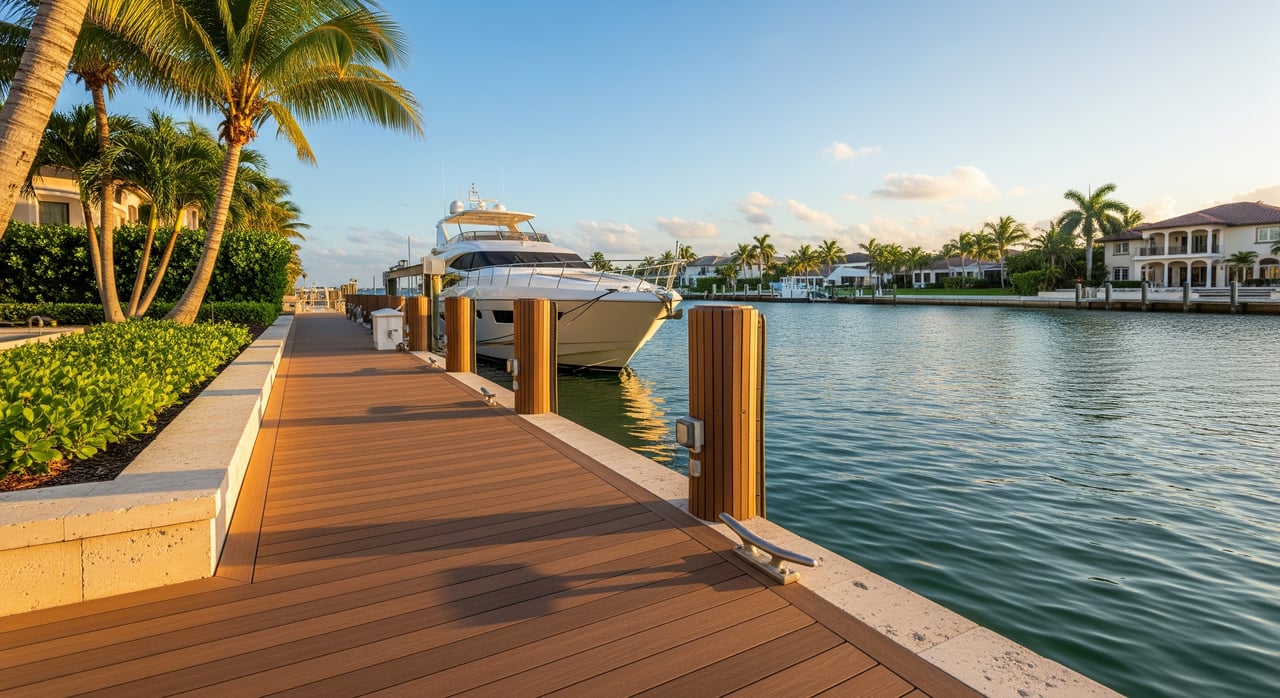
Ever see “no-bridges Gulf access” on a Royal Harbor listing and wonder what it actually means for your boat and lifestyle? If you love time on the water, the details matter. You want simple routes, safe depths, and enough vertical room for your vessel. This guide breaks down what “no-bridges” really covers, what it doesn’t, and how to verify the route from your dock to the Gulf through Naples Bay and Gordon Pass. You’ll also get a buyer-and-seller checklist and sample travel time scenarios so you can plan with confidence. Let’s dive in.
What “no-bridges” really means
When a listing says “no-bridges Gulf access,” it means there are no fixed-span bridges between the property’s dock and the Gulf that would limit your boat’s air draft. In simple terms, there is no permanent vertical obstacle that your boat needs to fit under. This is valuable for boats with tall masts, towers, outriggers, or radar arches.
In Royal Harbor, the idea is that you can navigate from your canal into Naples Bay and then out through Gordon Pass without passing under a fixed bridge. That can open the door for more vessel types and simplify the route for taller boats.
What it does not guarantee
“No-bridges” does not promise that other conditions are clear. You still need to confirm:
- Water depth in your canal and along the route, especially at mean low water.
- Canal width and turning room for your boat’s beam and length.
- Shoaling near the pass and along channels after storms or seasonal shifts.
- Temporary obstacles like work barges or dredging equipment.
- Local speed zones, currents, and no-wake areas that affect timing and handling.
How to verify in Royal Harbor
Before you rely on the label, verify the route end to end. Here is a practical approach:
- Review authoritative charts. NOAA nautical charts will show bridge locations, vertical clearances, marked channels, and soundings.
- Check local maps. Collier County and City of Naples GIS and aerial imagery help you visualize canal layouts and confirm there are no fixed spans on the way to the pass.
- Ask for a clear statement. Request in writing from the listing agent or seller: “Is there any fixed bridge on the shortest water route from this dock to the Gulf?” Ask for a simple map of the route.
- Call local experts. Contact marinas, harbor masters, or yacht clubs in Naples for current guidance on shoaling hot spots and best approach lines to Gordon Pass.
- Confirm operations and notices. Check U.S. Coast Guard and Florida Fish and Wildlife Commission resources for any speed zones, temporary closures, or navigation advisories.
Match your boat to Royal Harbor waterways
Your boat’s dimensions and setup determine how comfortably you can use a Royal Harbor property. Focus on four elements.
Air draft and tall structures
Air draft is the height from the waterline to the tallest fixed point on your boat. Measure it loaded the way you usually run the boat, including antennas, towers, biminis, and hardtops. No-bridges access benefits taller vessels such as sailboats and sportfish boats with towers. Remember to also check for overhead lines at the dock and any overhead limits on a lift.
Draft and canal depth
Draft is the depth your boat needs below the waterline. Ask for mean low water depths at the dock, in the connecting canal, and along the route to Gordon Pass. Dredged residential canals may have target depths, but local shoaling can change conditions. Even with Southwest Florida’s relatively small tidal range, a 1 to 3 foot swing can be the difference between clearing a shallow spot or rubbing bottom.
Beam, length, and turning room
Measure your dock and the distance between bulkheads across the canal. Consider how much room you need to turn, especially if your boat is wide-beamed or long. Narrow finger canals may require slow, precise handling, and passing other boats can be tight in high-traffic times. If you plan to berth a larger vessel, confirm there is enough clear channel width and space to maneuver without crossing property lines.
Lifts, docks, and equipment
If a lift is present, verify its capacity, beam limits, and vertical clearance. Many private lifts are set up for specific ranges of boat weight and size. Check the permit history and any HOA or municipal rules about lift design, canopies, or pier extensions. Fixed docks and seawalls also define how far you can project into the channel.
Routes, depths, and Gordon Pass
Royal Harbor funnels into Naples Bay and then out through Gordon Pass to the Gulf. Conditions at the pass and nearby sand bars can change with storms and seasons, which is why local knowledge matters. Depths, markers, and the best line through the pass may shift. Currents can run noticeably on ebb and flood tides and will affect timing and control, especially for smaller craft or during heavier sea states.
Before you run a new boat through the pass, consult current charts and local marina guidance, and consider timing your first few transits with favorable tides. If dredging has occurred in your canal or nearby waterways, ask for the dredge history and any recent sounding surveys.
How long to Gordon Pass
Travel time depends on your exact dock location, route distance, vessel speed, and speed-zone compliance. Rather than promise a single “minutes to the Gulf” number, use your measured distance to the pass and apply the simple formula: time (hours) = distance (nautical miles) ÷ speed (knots). Multiply hours by 60 for minutes.
Below are sample scenarios you can adapt. Pick the distance that matches your measured route and the speed that reflects how you operate in canals and open bay segments.
| Distance to pass | 6 knots (slow) | 12 knots (moderate) | 18 knots (fast) | 25 knots (planing) |
|---|---|---|---|---|
| 1 nm | ~10 min | ~5 min | ~3–4 min | ~2–3 min |
| 2 nm | ~20 min | ~10 min | ~7–10 min | ~5 min |
| 3 nm | ~30 min | ~15 min | ~10–15 min | ~7–8 min |
Actual times will vary with no-wake zones, traffic near the pass, tidal currents, and weather. Give yourself a margin on first runs and adjust as you learn the route.
Buyer and seller checklist
If boating capability is a key reason you are buying or selling in Royal Harbor, organize your due diligence around the water.
Documents to request
- A dimensioned dock plan with length, beam, bulkhead distances, piling locations, and depth at mean low water.
- Boat lift specifications, including rated capacity, maximum vessel dimensions, and any overhead limits.
- Canal depth records, recent sounding surveys, and dredging history or schedule if available.
- Aerial or satellite imagery showing the route to Naples Bay and any nearby navigation hazards.
- HOA or municipal rules related to boats, lifts, canopies, and permitted uses.
- Flood and permitting information tied to the dock, seawall, or lift.
Questions to ask the listing agent or seller
- Is the shortest water route from this dock to the Gulf free of any fixed bridges or scheduled bridge openings?
- What is the recorded or posted depth at the dock and at the shallowest point to Gordon Pass at mean low water?
- Has the canal been dredged recently? Is there a dredge schedule or history?
- Does the dock include a lift? If yes, what are the weight and dimension ratings, and what is the overhead clearance?
- Are there any known shoaling areas or navigation hazards on the route to the pass?
- Are there HOA or county limits on boat size, type, or overnight liveaboard status?
Contract and inspection considerations
- Add a contingency for boat-docking suitability at mean low water with your intended vessel.
- For sailboats and other high-air-draft vessels, include a clause confirming unrestricted vertical access to the Gulf or specify an acceptable maximum obstruction height.
- Arrange a professional marine survey or a test run with a local captain before closing when boating is a primary purchase driver.
When to bring in local pros
Even with no fixed bridges, local mariners’ knowledge makes a big difference. Seasonal sand shifts, post-storm changes, and strong tidal currents around Gordon Pass can alter the safest route or timing. Consider:
- Calling nearby marinas or harbor masters for the latest guidance on shoaling and channel markers.
- Reviewing NOAA Tides and Currents before planning first transits through the pass.
- Hiring a local captain for an orientation run if you are new to Naples Bay or running a larger vessel.
- Keeping lift equipment inspected and documenting maintenance for insurance and safety.
Next steps
If you are evaluating Royal Harbor for your boat and lifestyle, start by measuring your vessel, confirming canal depths and widths, and mapping your distance to Gordon Pass. Then request the right documents, speak with local resources, and plan a sea trial at conservative speeds and tides. A few clear numbers will help you buy or sell with confidence.
If you want a local, boutique-level guide to properties with true no-bridges Gulf access in Royal Harbor and nearby neighborhoods, connect with Nick Solimene. You’ll get neighborhood-specific insight, careful due diligence, and a tailored plan that fits how you actually use your boat.
FAQs
What does “no-bridges Gulf access” mean for Royal Harbor buyers?
- It means no fixed-span bridges on the route from your dock through Naples Bay to the Gulf, eliminating vertical clearance limits but not guaranteeing depth or width.
How can I confirm there are no fixed bridges on my route to Gordon Pass?
- Cross-check NOAA charts, county GIS and aerials, and get a written statement from the seller or listing agent with a simple route map for your specific property.
Do I still need to worry about canal depth and shoaling if there are no bridges?
- Yes. Depth at mean low water, shifting shoals near the pass, and narrow canal segments can all affect safe passage, especially for deeper or wider boats.
How do I estimate my boat’s travel time from Royal Harbor to the Gulf?
- Measure the nautical miles to Gordon Pass, then apply time = distance ÷ speed, adjusting for no-wake zones, traffic, currents, and weather.
What documents should I request when buying a Royal Harbor waterfront home?
- Ask for a dock plan, lift specifications, canal depth records or surveys, dredge history, aerial route imagery, and any HOA or municipal boating rules.
Should I hire a local captain for my first trips through Gordon Pass?
- It’s a smart idea, especially after storms or when running larger vessels, since local knowledge helps with shoaling, currents, and the safest line through the pass.